
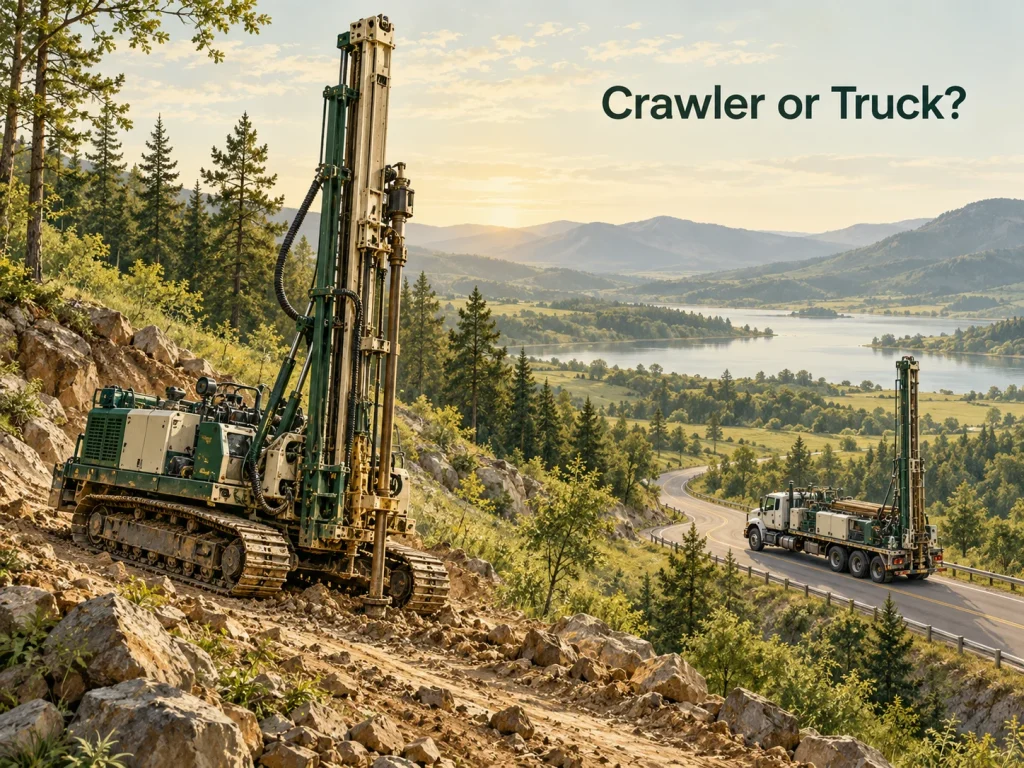
For water well projects, crawler and truck-mounted rigs should be compared through four separate questions: how the equipment reaches the site, how it moves between wells, how the complete package is transported and how it is positioned for work. The platform name alone cannot settle those questions.
A crawler platform does not guarantee access to every ground condition, and a truck-mounted arrangement does not automatically establish public-road eligibility in every destination. The useful comparison connects the actual rig configuration to the route and site. This guide explains the platform differences, uses documented equipment examples and shows how to compare two proposals without confusing mobility with drilling capability.
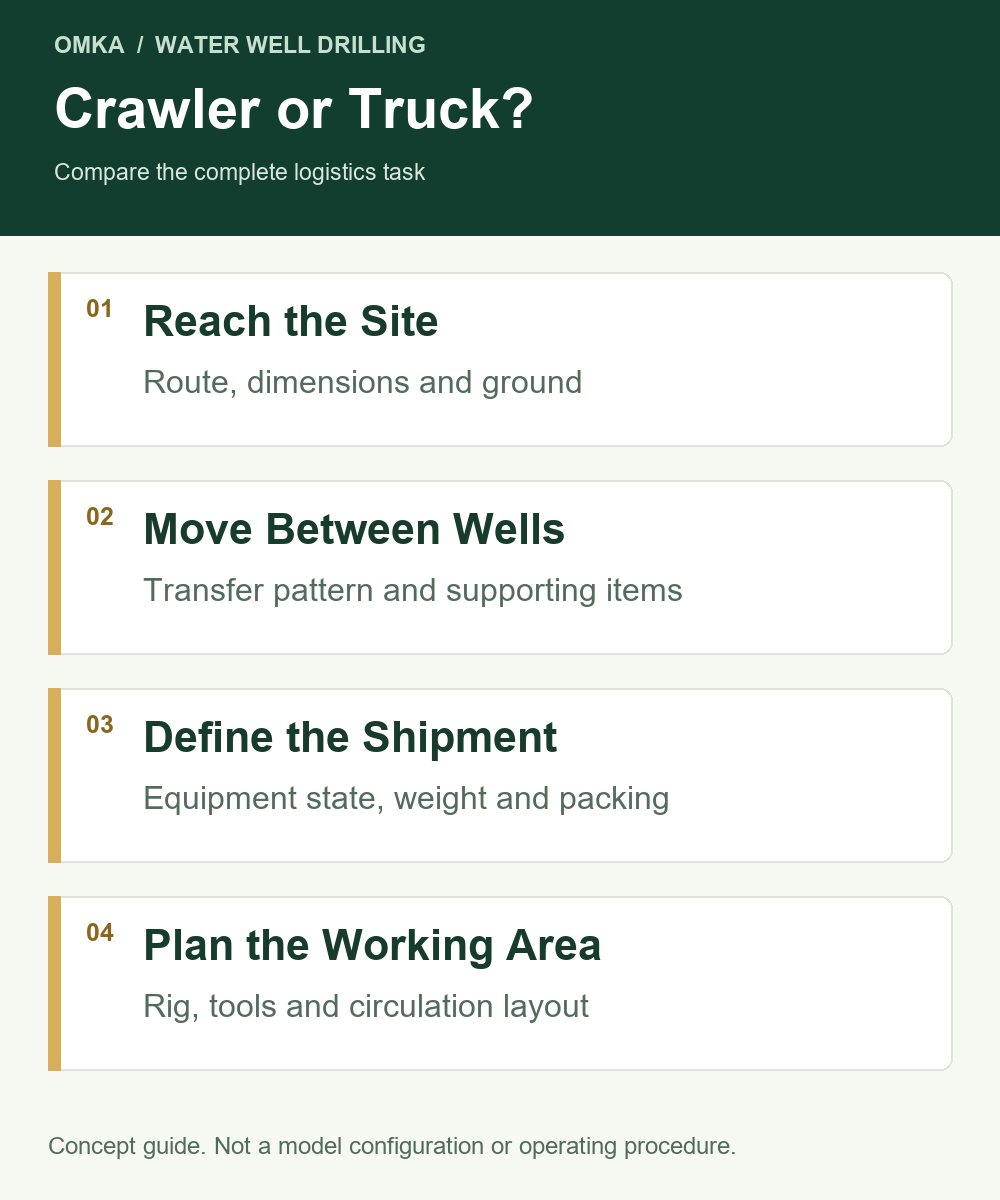
Separate the Platform From the Water Well Drilling Method
Crawler describes a tracked platform. Truck-mounted describes a drilling installation carried on a vehicle platform. These terms identify aspects of mobility and support; they do not identify the bottom tool or circulation method by themselves.
A water well rig can therefore be described by several independent features. It may have hydraulic drive functions, a crawler platform and a DTH drilling arrangement. A truck-mounted unit may also support a documented air or fluid configuration. Those descriptions belong to different categories.
Start the comparison by stating the required method and drilling task separately from the platform. Otherwise, a buyer may interpret a platform advantage as evidence that the machine can perform any borehole. The rotary, lifting, tool and circulation assessment remains necessary for both proposals.
Platform selection should also use the actual supplied configuration. A product-series photograph can explain the arrangement, but it does not confirm the exact vehicle, dimensions or included equipment for the order. Keep identification and mobility evidence together.
Compare the Route Into the Drilling Site
Access Dimensions and Turning Space
Record the restrictions between the delivery point and the proposed working location. Gates, overhead clearance, turning space and narrow sections can affect the practical route. Compare those restrictions with the relevant transport or travel arrangement of the actual equipment.
The rig may not be the only item entering the site. A compressor, rods, tools and handling equipment may have their own transport requirements. Selecting a platform that fits the entrance does not prove the full package can be delivered and placed as planned.
Where the route description is incomplete, identify what must be measured or confirmed. A supplier can review a clear restriction, but a phrase such as “small road” does not define the clearance or turning conditions.
Ground and Placement Conditions
Ground conditions influence how equipment can reach and be supported at the working location. Platform type is relevant, but the task still needs actual route and site information. A track arrangement should not be promoted as a universal solution to soft, uneven or restricted ground.
The same care applies to truck access. A route that accommodates ordinary local vehicles may not establish suitability for the proposed drilling vehicle and package. Weight, dimensions and the actual route conditions need an appropriate assessment.
Do not use a catalogue climbing-angle figure as permission to travel over any site of that apparent slope. The relevant equipment documents and actual conditions matter. Purchasing guidance should help identify the information needed, not become an operating instruction based on one advertised limit.
Plan Movement Between Water Well Sites
Moving within a site and relocating between sites are different tasks. A crawler’s travel capability does not define the complete long-distance transport plan. The purchaser should identify when separate transport equipment is required and who provides it.
A truck-mounted arrangement integrates drilling equipment with a vehicle platform. That can be relevant where the route and vehicle requirements suit the task, but the actual package and destination conditions still need review. The platform does not remove every supporting-equipment movement.
For contractors working across several well locations, record the expected transfer pattern. Are the wells within one property, spread along accessible routes or reached through restricted final approaches? The answer helps organise the comparison more effectively than simply stating a desired travel speed.
Include setup and supporting items in the transfer scope. Rods, tools, the circulation system and any customer-supplied equipment must arrive and be placed too. A rig moving quickly while the rest of the package remains unresolved does not provide a complete relocation plan.
The correct result is a documented logistics arrangement for each proposal. Avoid assigning a universal number of wells per day or guaranteed transfer time from platform type alone.
Check Transport Dimensions, Weight and Loading Scope
Two Documented MK300 Examples
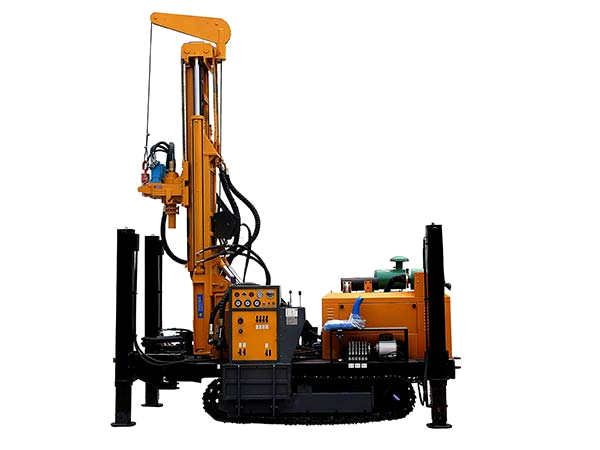
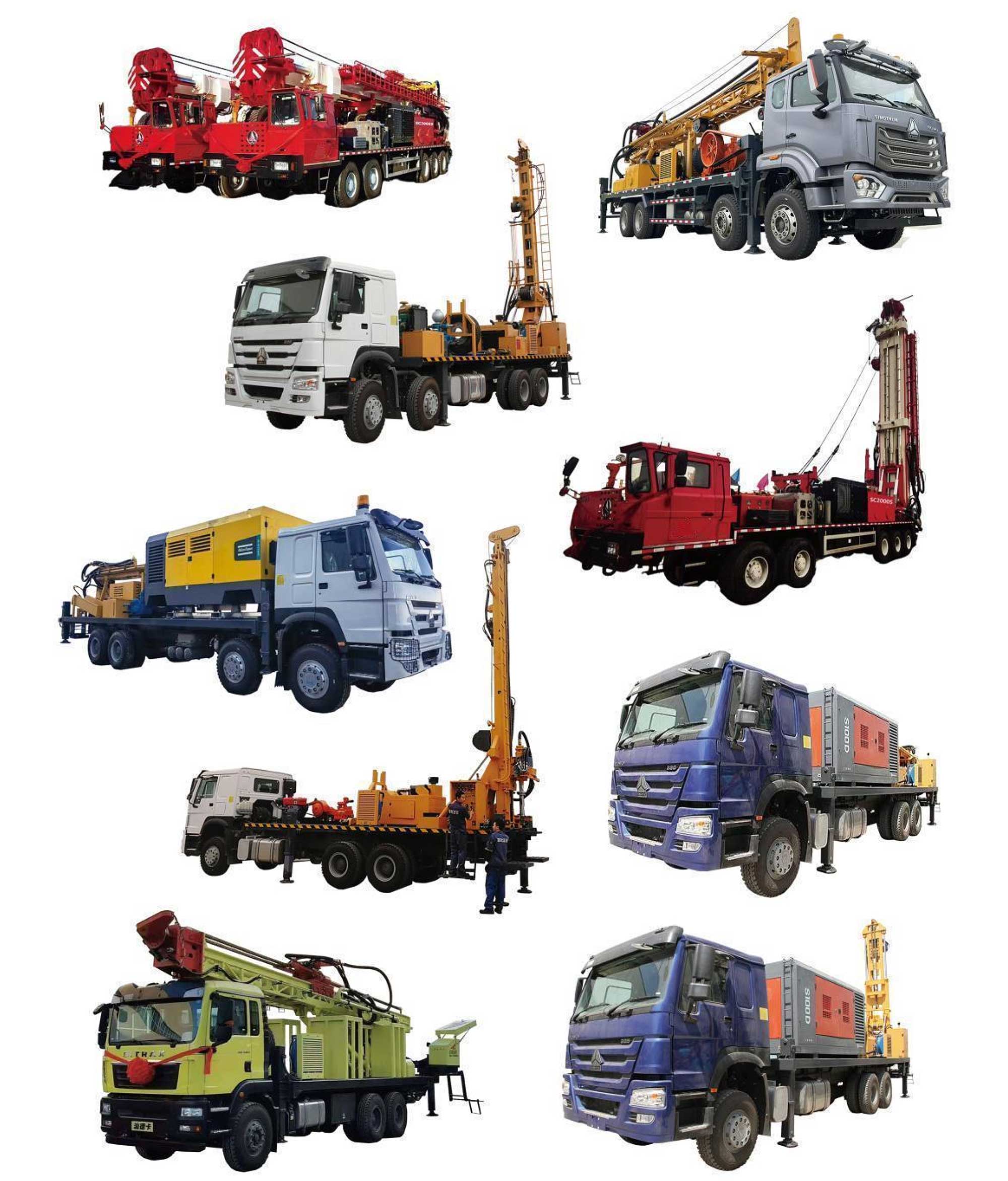
The available crawler MK300 record lists overall dimensions of 4.1 × 2 × 2.5 m and a total weight labelled 7.2 T. The separate truck-mounted MK300 source lists transport dimensions of 9.1 × 2.55 × 3.4 m and weight of 20 t. These are catalogue values for two documented configurations, not ranges for all crawler and truck-mounted machines.
Their shared MK300 designation does not make them equivalent units. The records also belong to different platform descriptions. Buyers should identify the actual category and offered configuration before applying either set of dimensions to transport planning.
Swipe or scroll the table to compare all columns.
| Documented Example | Source Dimensions | Source Weight | How to Use the Information |
|---|---|---|---|
| Crawler MK300 | 4.1 × 2 × 2.5 m, listed overall dimensions | 7.2 T, original label | Initial machine comparison; confirm shipment and equipment state |
| Truck-mounted MK300 | 9.1 × 2.55 × 3.4 m, listed transport dimensions | 20 t | Initial vehicle-package comparison; confirm actual configuration |
The source labels are deliberately retained. The examples show a meaningful difference between two documented machines, but they do not establish the packed dimensions, shipment weight or road compliance of a future order. Obtain the actual packing and configuration information for that purpose.
Machine Transport Versus Complete-Package Transport
A shipment can contain more than the main rig. The supporting compressor or pump, rods, tools, spares and packing may add separate pieces and responsibilities. Compare the full shipment rather than place a rig-only weight beside a complete-package quotation.
Loading and unloading scope should also be explicit. Identify what equipment is included, what the customer provides and which handling documents apply. The existence of outriggers or a winch in a catalogue is not a general loading procedure or proof that no additional arrangements are required.
Transport responsibility is part of the offer. A quoted machine ready at one location is not automatically comparable with equipment delivered under a broader arrangement. Keep logistics scope visible even where final transport pricing is being obtained separately.
Include the Working Position and Supporting Equipment
The working layout is different from the transport envelope. Mast position, the support arrangement, rod handling, tools and auxiliary equipment all contribute to the space needed for the planned task.
A route can therefore be adequate while the actual working area remains unresolved. The entrance may permit delivery, but the site must also accommodate the selected configuration and supporting system. Ask for the relevant equipment layout and compare it with the site information.
The air or fluid arrangement can change the layout discussion. A compressor and its distribution path need placement; a fluid system also needs its relevant supply and return arrangements. Neither belongs outside the platform assessment simply because it is supplied by another company.
Rod storage and handling are another common omission. The platform comparison should consider how the proposed package and working arrangement address them. Without that information, a compact machine specification can conceal a larger practical equipment requirement.
Two Hypothetical Route Scenarios
Consider a contractor drilling several wells at locations connected by routes whose dimensions and conditions have been documented. The final working areas are also known. Here, the buyer can compare complete relocation arrangements for crawler and truck-mounted proposals against a defined route.
Now consider a different task with a restricted final entrance and incomplete information about the working area. The immediate need is to establish those restrictions before declaring either platform preferable. A compact machine may still need supporting-equipment delivery and an adequate work layout.
These are hypothetical purchasing scenarios, not customer cases. Their purpose is to distinguish the questions. The first task has a clearer basis for comparing transfers. The second needs additional access and placement information before the equipment proposals can be evaluated responsibly.
In both situations, assess the drilling system separately. A favourable mobility arrangement does not establish appropriate rotary capability, lifting, tools or circulation for the well. A proposal must address the drilling task and the logistics task together.
Keep the Rig and Supporting Transport Together in the Plan
Map each shipment item to its proposed means of delivery and its location at the site. This simple record can reveal whether a platform proposal actually addresses the entire package or only the main machine.
For a contractor using existing transport, include the relevant vehicle and loading information in the review. Do not assume that a previously used arrangement suits a new machine merely because both rigs belong to the same platform category.
The plan should also identify the equipment state used for each dimension. An overall machine description, a transport drawing and a packed shipment list serve different purposes. Preserving those labels helps the buyer avoid comparing dimensions that describe different stages.
Common Misunderstandings About Crawler and Truck Platforms
One misunderstanding is that crawler means unrestricted access. The actual dimensions, ground conditions and relevant equipment instructions remain important. Tracks are a platform feature, not evidence that every route is suitable.
Another is that truck-mounted means automatic public-road operation. The actual vehicle and destination requirements must be verified. A machine description does not establish registration, permits or other local compliance.
A third is assuming the smaller machine always creates the simpler shipment. The supporting system may travel separately, and the transfer arrangement may involve additional equipment. Compare the full scope.
A fourth is choosing platform type from drilling depth alone. Depth informs the drilling-system assessment, but access and transport require route and equipment information. The two decisions are connected without being identical.
Finally, avoid assuming a platform change leaves every other field unchanged. Two units with similar model labels can have different engines, handling systems, dimensions and options. Compare the actual configurations rather than substitute one photograph for another.
Compare Two Platform Proposals Against the Same Task
Build a worksheet with the route, final access, transfer pattern, working layout and complete equipment scope. For each proposal, record the actual configuration and the documents supporting the comparison.
Separate established inputs from missing information. If gate width is measured but shipment dimensions are not confirmed, record that distinction. The result should show what can already be compared and what needs a supplier or site response.
The existing crawler or truck platform enquiry guide helps collect these inputs. Use this article’s explanation to interpret the answers, rather than repeat the checklist without understanding the differences between site movement, transport and working layout.
If tools or auxiliary equipment are already owned, include them in both proposals. Their exclusion from the new purchase does not exclude them from the route and site planning.
Conclusion
Crawler and truck-mounted water well rigs should be compared against the actual route, transfer pattern, working area and complete package. Use documented configurations and preserve the distinction between machine dimensions, transport information and shipment scope.
The best purchasing comparison makes both mobility and drilling requirements visible. It explains how the proposed equipment will reach and occupy the site while separately assessing the water well drilling system.
Share your access restrictions, working-area information, transfer pattern and supporting-equipment scope through our contact page to discuss the platform proposals.