
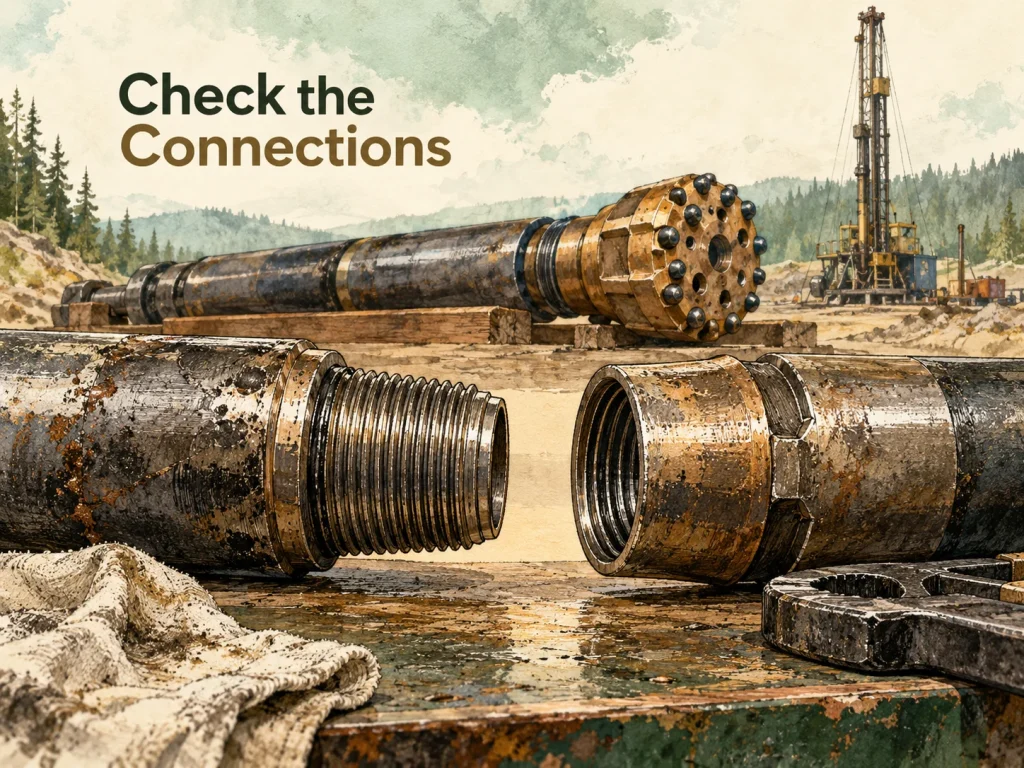
A tool photograph or a similar product name is not a complete compatibility specification. Use this checklist to collect the dimensions and interfaces that need confirmation.
Name The Tool And Intended Use.
State whether the enquiry concerns a hammer, bit, rod, casing or another item, together with the drilling method and intended equipment.
Provide Available Identification.
Share model, markings, drawings, manufacturer references, size and connection details. Label uncertain information instead of replacing it with an assumed value.
Explain Replacement Or New-Equipment Requirements.
Say whether the tool replaces an existing item or forms part of a new package, and identify adjoining interfaces and required quantity.
Request Confirmation Before Ordering.
Ask for offered tool identification, dimensions, connection specification and intended application to be confirmed in the technical review.
Enquiry Checklist
- Tool type and drilling method
- Existing equipment and tool identification
- Dimensions and connection references
- Quantity and replacement context
Technical Review Boundary: This article does not confirm hammer, bit, rod, casing or thread compatibility without a supporting technical reference.
A Similar Diameter Is Not A Complete Match
Outside diameter is only one item in a tool identification. Connection type, mating component, length and the relevant shank or casing arrangement can also matter. Supply markings or drawings where available. Photographs are helpful context, but should not be used as the sole basis for confirming compatibility.
Name The Parts To Be Connected
For a replacement tool, identify the equipment on both sides of the connection. For a new tool package, list the hammer, bit, rods or casing-system items requested. This makes it easier to distinguish a single component enquiry from an enquiry for a complete assembly.
Confirm The Supply And Operating Scope
Include quantity, application and any documented operating requirement. Request confirmation of included parts, connection identification and supporting instructions before ordering. High-pressure or middle-pressure product naming is not a numerical operating-pressure specification. Neither an image nor a general tool description overrides the supplied technical documentation.