

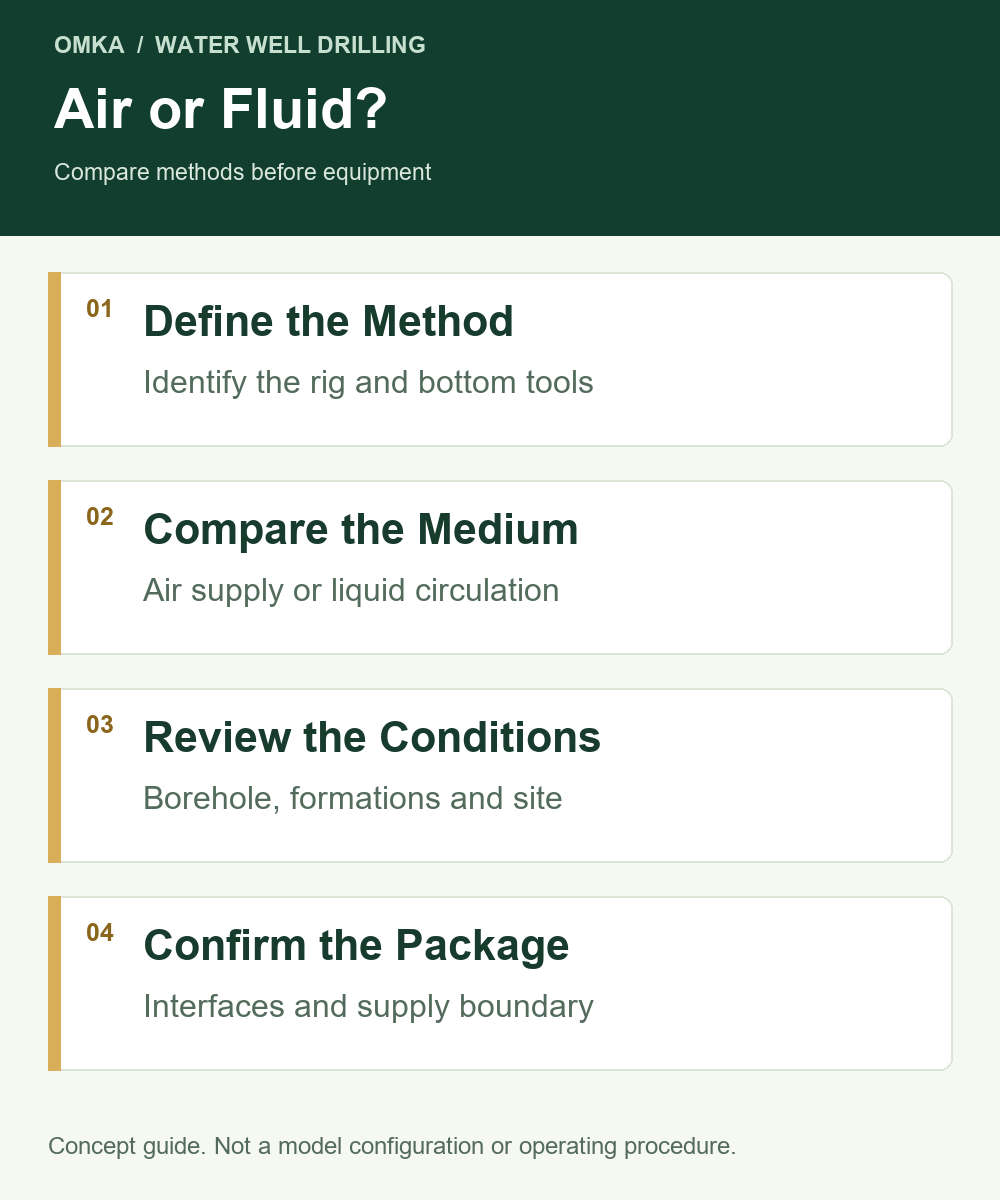
A mud pump circulates drilling fluid, while an air compressor supplies compressed air for an air-drilling arrangement and, where applicable, a DTH hammer. The appropriate supporting system depends on the drilling method, borehole requirements, formation information and tools. Target depth alone does not decide between them.
For a water well equipment buyer, this is a system question rather than a contest between two machines. The pump or compressor must be considered with the rig, drill string, bottom tool and return arrangement. Understanding these relationships helps you compare equipment packages without accepting a universal recommendation based on one number.
What Does Each System Do in Water Well Drilling?
Mud Pump and Fluid Circulation
In a conventional direct fluid-circulation system, the pump sends the selected drilling liquid through the drilling assembly. The returning flow brings cuttings from the borehole to the surface. The pump therefore supports circulation; it is not the component that supplies every mechanical action of the drilling rig.
The liquid’s properties and the project’s drilling design affect what the circulation system must accomplish. Water and prepared drilling fluids are not interchangeable labels for every task. The equipment package may also need arrangements for supply, return handling and solids management. Those items should be described alongside the pump rather than treated as an invisible part of the purchase.
Fluid circulation can form part of a borehole-management plan, but the pump itself does not guarantee a stable hole. Formation conditions, fluid selection, well design and casing requirements remain relevant. Selecting the pump means reviewing its duty within that wider plan.
Air Compressor and Air Drilling
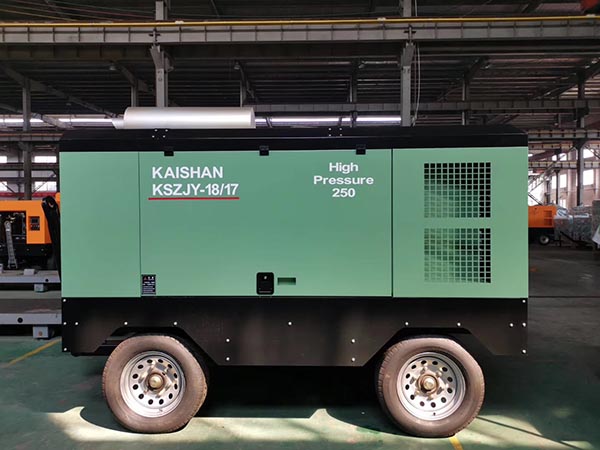
The compressor provides the air supply required by the selected arrangement. In a DTH system, the bottom hammer uses compressed air, and the air circulation also contributes to cuttings removal. In air rotary drilling, the bottom-tool arrangement differs, even though air remains the circulation medium.
The compressor should not be described simply as the rig’s engine. The rig may have its own power and hydraulic systems for rotation, feed and lifting. Compressed air performs a separate role in the tools and circulation. Recognising that division prevents a buyer from assuming that a larger compressor can resolve an unrelated limitation in rod handling or rotary capability.
A compressor review therefore needs the actual tool requirements, corresponding pressure and flow ratings, distribution arrangement and site conditions. A general claim that a machine is “for water wells” does not establish its suitability for a particular hammer and borehole.
How Do the Two Water Well Drilling Systems Compare?
The fairest comparison starts with functions and required information. Compare the medium, tools, circulation path, surface arrangements and equipment interfaces. Do not compare advertised maxima as though they represented the same duty.
Swipe or scroll the table to compare all columns.
| Comparison Point | Fluid-Circulation Package | Air-Drilling Package |
|---|---|---|
| Supply medium | Selected drilling liquid | Compressed air |
| Primary supporting equipment | Pump and associated fluid system | Compressor and associated air distribution |
| Bottom-tool information | Tools for the planned method | Rotary tool or DTH hammer and bit |
| Rating questions | Flow and pressure for the relevant pump duty | Airflow basis and corresponding working pressure |
| Surface planning | Supply, returns and solids handling | Air supply, distribution and return arrangements |
| Interface questions | Pump, pipework and drilling-system connections | Compressor, hoses, rods and tool connections |
| Project considerations | Formation, fluid plan and borehole requirements | Formation, tool demand and borehole requirements |
The table is a purchasing framework, not a verdict. Its purpose is to reveal what must be known before a comparison becomes meaningful. The actual system still needs project and equipment documentation.
Comparing only the purchase price misses other scope differences. One proposal may include a broader circulation arrangement, while another lists only the supporting machine. Even where the drilling objective is the same, the equipment and customer responsibilities may differ. Those differences should be identified before discussing which offer is more economical.
Which Project Conditions Affect the Choice?
Formation and Borehole Stability
Formation information helps the project team assess the drilling method and borehole-management requirements. A broadly described hard-rock task raises different questions from a borehole passing through uncertain mixed ground. However, neither description justifies a rule that one medium is always mandatory or always unsuitable.
The useful step is to identify what is known about the sequence of formations and what remains uncertain. Then review the proposed method, tools and casing or other project requirements together. The equipment discussion should follow that assessment rather than substitute a supplier’s slogan for the project information.
If the ground information is incomplete, the proposal should explain what it assumes. That does not mean every project needs the same additional equipment. It means the buyer needs to understand which conditions the proposed package is intended to address.
Depth, Diameter and Tool Requirements
Depth and borehole diameter influence the circulation and drilling assembly. They also affect the information needed to review rods, tools and the overall system. A depth figure without the opening size and method does not describe the complete task.
For an air system, the hammer documentation is central when a DTH arrangement is proposed. The compressor’s ratings should be examined against the tool and system requirements, not selected from a generic depth-to-airflow chart. For a fluid system, the pump must be assessed for the actual circulation duty and the selected tools.
The same target depth can therefore lead to different supporting-equipment discussions. A larger borehole, a different drill-string arrangement or a change in method can alter the review. The relevant question is what the system must supply under the intended conditions.
Water Availability and Site Logistics
A liquid-circulation plan needs a practical supply and return arrangement. Ask how the site will provide the necessary medium, where returning material will be managed and which items are included in the equipment scope. This helps distinguish an equipment quotation from a complete site arrangement.
Air drilling still needs site planning. The compressor, hoses, rods and rig must be positioned and transported as a coordinated package. The distribution route and equipment access should be considered before assuming that an air system removes all logistical constraints.
Consider two hypothetical tasks. A contractor with a defined method and existing supporting equipment mainly needs a compatibility and scope review. A buyer planning a new package for incompletely described ground needs a broader method and circulation assessment. These situations differ in information and responsibilities; they do not prove that one machine is universally better.
Can One Water Well Rig Work With Both Systems?
Some rig documentation describes support for more than one drilling arrangement. That information is useful, but the exact configuration must be identified. A general statement about air and mud capability does not establish that every supplied unit contains all required equipment or can change methods without additional items.
Review the rig’s documented method support, the tools, supply connections and proposed accessories. Distinguish the machine’s capability from the contents of a particular quotation. A compatible option may exist without being included in the base price.
The buyer should also ask how existing components fit the proposed arrangement. An owned pump or compressor is an asset only if it is suitable for the planned task and the relevant interfaces. Merely having equipment available is not the same as completing the system assessment.
This is a purchasing review, not an instruction to modify a rig. Any configuration change must follow the applicable equipment documents and qualified technical assessment. General marketing explanations should not become a field procedure for changing connections or operating settings.
What Must Be Matched Across the Rig, Tools and Supporting Equipment?
For an Air-Drilling Package
Start with the drilling method and exact bottom tool. Identify the hammer and bit, drill rods and connection specifications. Obtain the relevant air requirement information and compare it with the compressor’s pressure and airflow documentation.
Then include the distribution system. Hose and connection ratings, the proposed routing and environmental conditions belong in the discussion. Catalogue figures at the compressor do not by themselves describe conditions at the bottom tool.
The outcome should be a documented package review. It should show the supplied components and identify any customer-owned equipment or unresolved information. It should not simply name a rig and compressor and declare that they match.
For a Fluid-Circulation Package
Identify the intended method, tools and pump duty. Review the pump’s relevant flow and pressure information with the configuration and drive arrangement. List the proposed connections and the supply-and-return equipment boundary.
Return handling deserves its own line in the scope. A pump quotation may not include the surface arrangements needed by the project. The buyer should know which items are supplied, which are customer responsibilities and which need separate design information.
Swipe or scroll the table to compare all columns.
| System Item | Document to Obtain | Question It Helps Resolve |
|---|---|---|
| Rig | Exact configuration and method information | What arrangement is supported? |
| Bottom tools | Model and application documents | What does the selected tool require? |
| Pump or compressor | Relevant duty or rating documentation | What can the supporting unit supply? |
| Connections | Drawings and specifications | How are components connected? |
| Surface equipment | Written supply boundary | What must the customer provide? |
Use the table to organise evidence. Where a field is unknown, record the gap rather than infer compatibility from photographs. This is particularly important when equipment comes from several suppliers or includes items already owned by the contractor.
Follow the Return Path as Well as the Supply
A system review should follow the medium from its supply through the drilling arrangement and back to the surface. Concentrating only on the supporting machine can leave the returning material and surface responsibilities undefined.
For a liquid system, ask which supply, return and solids-handling items are part of the proposal and which belong to the site arrangements. For an air system, identify the documented drilling and return arrangement rather than assume that naming a compressor defines it. The purpose is to understand equipment boundaries, not to prescribe a universal layout.
A useful scope drawing identifies components and ownership without claiming model-specific engineering details. It can make a missing responsibility easier to see before the order is placed.
Common Mistakes When Choosing an Air or Fluid System
The first mistake is deciding from depth alone. Depth matters, but it leaves out diameter, tools, method and ground information. A supporting system selected without those inputs may solve a different task from the one actually planned.
The second is assuming that the bigger unit is always preferable. A larger nominal rating does not establish appropriate operation, suitable interfaces or a complete supply scope. The aim is a documented match, not the largest number in a brochure.
The third is treating ground descriptions as universal prohibitions. Mixed formations and project-specific borehole requirements make simple statements such as “air never works in sand” unreliable as purchasing rules. Ask what the proposed method assumes and which supporting measures belong to the plan.
The fourth is purchasing the pump or compressor before defining the rest of the system. That can leave tools, connections, handling and return arrangements unresolved. Evaluate the circulation package alongside the drilling assembly so each supplier understands the same equipment boundary.
What Information Helps Build a Suitable Water Well Drilling Package?
Prepare the target depth, borehole dimensions, formation information and planned drilling method. Include the exact rig and tools if already selected. Describe existing supporting equipment with model details and available documentation, rather than only a general machine name.
Explain the site conditions relevant to equipment placement, access and water or fluid management. State whether you need only a supporting unit or a broader package. These details allow the discussion to focus on suitability and scope instead of repeating generic comparisons.
The existing air compressor enquiry guide helps organise the air-system inputs. For the broader drilling task, use the water well rig enquiry checklist. Neither checklist replaces the technical assessment; each makes the information easier to review.
Conclusion
Choose between air and liquid circulation by starting with the water well task and drilling method. Understand the supporting unit’s role, review the bottom tools and circulation requirements, and define the equipment and customer responsibilities in writing.
A useful comparison explains conditions and boundaries. It does not promise one universal winner. Once those inputs are clear, the pump or compressor can be evaluated as part of the complete drilling package.
Share your drilling method, borehole requirements, available formation information and existing equipment through our contact page so we can review the supporting-system scope.