
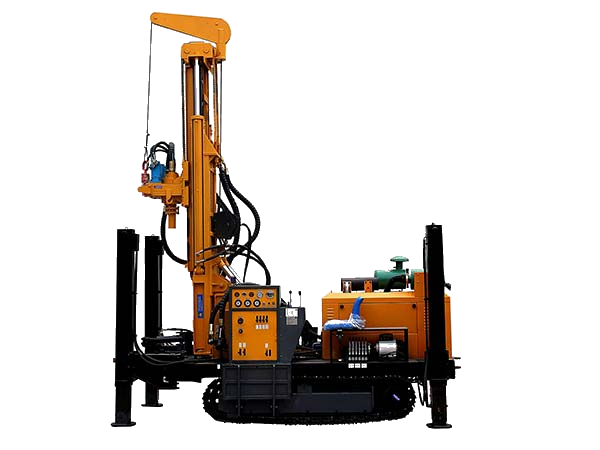
Application planning guide. This is an original explanation of a possible equipment enquiry, not a completed customer project, installation report or guaranteed configuration.
Define The Borehole And Its Purpose
Distinguish domestic supply, irrigation and other intended uses. Record the planned borehole diameter separately from the desired casing or pump diameter. If a local designer has prepared a completion plan, include it with the enquiry rather than assuming that all dimensions are interchangeable.
Describe The Proposed Drilling Method
State whether the enquiry concerns air-assisted DTH drilling, mud circulation or a method not yet decided. Include the available ground report and any known constraints. Method choice and borehole support need site-specific review; the presence of a compressor or mud pump in a catalogue is not proof that a proposed package is suitable.
Review The Equipment As A System
Identify what is already owned and what must be quoted. Discuss operating pressure and airflow with the consuming equipment, not independently. Check rod dimensions and connections, tool requirements, lifting and transport information against the specific model record.
Prepare A Useful Enquiry
Send the target depth and diameter, ground information, drilling method, destination, access constraints and existing equipment list. Request a clear quotation scope for the rig, tools, supporting equipment and documentation. Do not treat optional accessories as included unless the quotation says so.
Explore Related Equipment
Water Well Drilling Configuration
Planning A Water Well Drilling Enquiry? Start With These Details.
The Task
Plan a water-well drilling equipment enquiry around a defined borehole, rather than selecting a rig from depth alone. Intended water use, target depth, diameter and the proposed completion arrangement are separate inputs.
Site And Operating Conditions
Describe available ground information, expected loose layers or rock, groundwater observations, site access and the working area. Mark assumptions clearly when a borehole log or survey is not available.
Equipment Roles
Water well rig: rotation, feed, lifting and handling. Air compressor or mud pump: support the intended drilling method where required. Drill rods, hammer, bit and casing equipment: subject to dimension and interface checks.
Planning Boundaries
A listed drilling depth is not a prediction of site performance. Ground conditions, hole size, tools and supporting equipment affect the actual task. Drilling equipment does not guarantee groundwater quantity or drinking-water quality.