

A 300 m target describes how deep you intend to drill, but it does not define a complete water well equipment requirement. Borehole diameter, formation information, drilling method, drill-string arrangement, supporting circulation equipment and site conditions all influence the review. A model name or catalogue depth cannot answer those questions by itself.
The practical starting point is a task description. Once the planned borehole and equipment boundary are clear, a supplier can assess a specific configuration against them. This guide explains how to organise that assessment and why two projects with the same 300 m target can require different purchasing decisions.
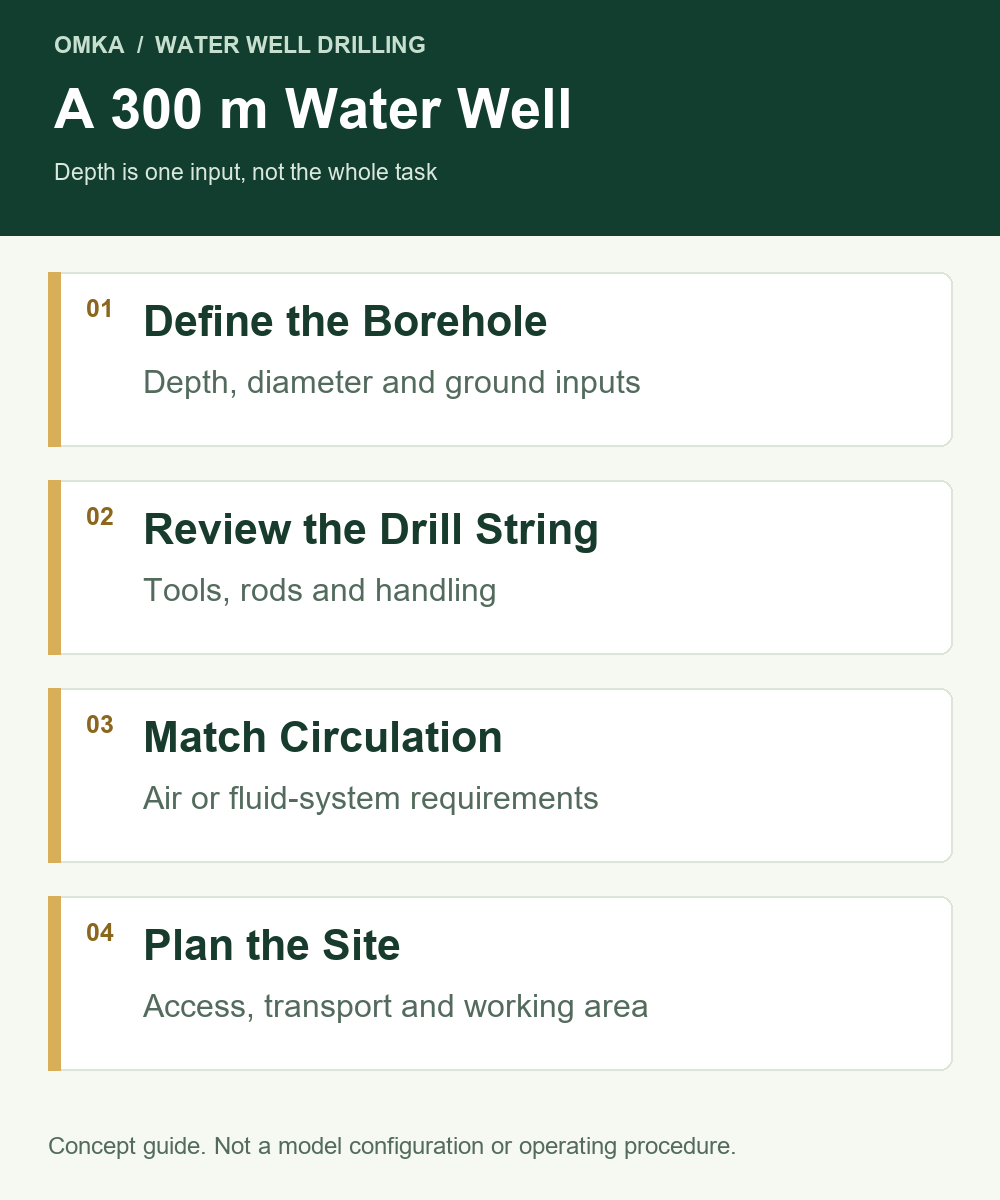
Define the Borehole Before Selecting a Rig
Target Depth and Borehole Diameter
Record the target depth separately from the planned hole diameter. Diameter determines the size of the opening being drilled and helps define the tool and circulation arrangement. A depth-only enquiry leaves that part of the task unresolved.
If the planned borehole changes diameter through different sections, describe the proposed sequence rather than present one number as the whole design. The equipment assessment should address the intended task, including the relevant tools and handling requirements. The rig catalogue is an input to that assessment, not a substitute for defining it.
It is also important to distinguish the drilling diameter from the final casing dimensions. These are related through the well design, but they are not interchangeable fields. Asking for a drill based only on a casing size can conceal other requirements unless the project information is clear.
Formation Information and the Water Well Objective
Provide the available ground information and identify its source. Nearby well records or project reports can help describe the expected task, but an assumption should remain labelled as an assumption. Do not describe uncertain mixed ground as confirmed hard rock merely to simplify the quotation.
The intended water well also has requirements beyond reaching a depth. Water quantity, quality and completion are separate matters that involve the site and well design. Selecting a drill does not establish the groundwater resource or guarantee the finished well’s performance.
A useful equipment brief therefore separates the drilling task from the expected water-supply outcome. The equipment discussion can assess the borehole and supporting system while the relevant project specialists address the water resource and completion requirements.
Separate Catalogue Depth From the Project Target
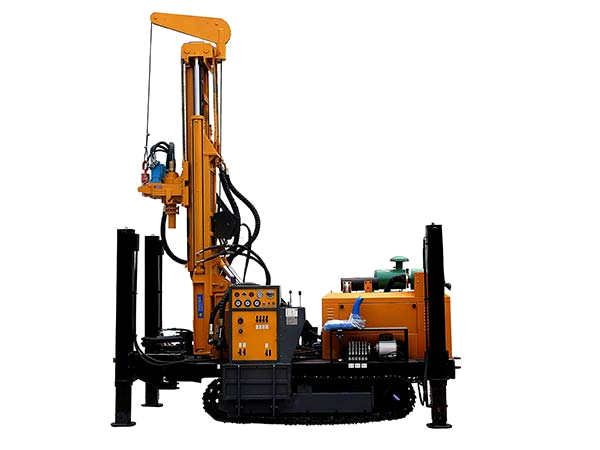
A listed drilling depth helps identify a model’s advertised application range, but the underlying conditions still matter. The value should be read alongside diameter, tools, method, configuration and other relevant documentation. It should not be treated as an unconditional promise for every borehole to that depth.
Avoid combining independent catalogue maxima into one assumed operating condition. The maximum listed diameter, greatest torque, fastest rotation and deepest stated capacity may not describe a single simultaneously available configuration. Where the relationship is unclear, request the relevant documentation.
Model names can introduce another confusion. In the available OMKA source material, the crawler MK300 and truck-mounted MK300 belong to different equipment descriptions and parameter sets. The shared designation does not make the engine, handling arrangement or transport dimensions identical.
When requesting information, specify the platform and complete configuration. This allows the review to refer to the correct product records instead of comparing a crawler specification with a truck-mounted quotation under one shortened model label.
Review Drill Rod Handling and Pullback Requirements
Rod Length, Mast Travel and Handling
Drill rods extend the assembly as the borehole advances. Their length must be considered with mast travel, handling equipment and the intended working arrangement. A catalogue listing several rod lengths does not explain every handling configuration or accessory required.
The crawler MK300 source lists a 3.3 m advance length and several rod-length options. Those fields illustrate why the buyer needs to understand the actual handling arrangement. They are not a reason to assume that all listed options are supplied together or used in the same way.
Connection information is equally important. Rods, adapters and bottom tools form a connected assembly. Compatibility should be established through accurate identification and drawings rather than approximate thread appearance or a statement that both products are “standard.”
Lifting and the Planned Drill String
The drilling assembly includes more than a count of rods. Tooling, connections and any relevant casing-handling task also need to be described. The lifting review must use the actual configuration and conditions rather than a generic estimate derived from depth alone.
A published lifting field is useful, but its meaning and application should be clear. If a legacy table uses “T” without defining the measurement convention or operating condition, do not silently convert it into a precise engineering conclusion.
The buyer’s role is to provide the planned assembly and request a documented assessment. A fixed rule such as always buying twice the required catalogue depth or applying one universal lifting margin can conceal the very configuration details that should be reviewed.
Plan the Air or Fluid-Circulation System
For a DTH arrangement, identify the intended hammer, bit and rods, then review the air supply and circulation task. The compressor’s relevant working pressure, airflow basis and distribution arrangement belong in the assessment. A 300 m project label does not determine a universal compressor size.
For a fluid-circulation arrangement, describe the method, tools and proposed pump system. Pump flow and pressure should relate to the intended duty. Water or fluid supply, return handling and solids management can also change what must be purchased or provided at the site.
Some rig documents describe more than one supported arrangement. That capability should be checked for the actual supplied configuration. It does not mean a base machine includes every component needed for both systems.
Supporting equipment should be evaluated early enough to affect the quotation. A rig price that excludes the compressor, pump or relevant connections cannot be compared directly with a complete-system offer. Define what the contractor already owns and what the new supplier must provide.
Compare Access, Transport and the Working Area
The equipment must reach the site and be positioned for the planned work. Record route restrictions, access dimensions and known ground or placement constraints. These inputs affect the platform discussion separately from the drilling-method discussion.
Transport planning should include the supporting unit, rods, tools and packing. A compact rig may still require additional transport for a substantial package. Conversely, a truck-mounted configuration may carry some equipment while other items still travel separately.
Do not confuse transport dimensions with the working footprint. The mast position, support arrangement, rod storage and circulation equipment can require additional space. A machine fitting through an entrance does not establish that the site has an adequate operating layout.
The project brief should identify who supplies transport and loading arrangements. Appropriate planning follows the actual equipment and local requirements; it should not rely on an assumed road-registration status or a catalogue photograph showing a particular loading scene.
Two Hypothetical 300 m Tasks: Why the Questions Differ
The following comparison is an editorial example, not a customer case or model recommendation. Both tasks have a 300 m target, but the known information and equipment assumptions differ.
Task A has a defined borehole diameter, documented formation information and an identified drilling method. The contractor already owns supporting equipment with available model and connection records. The immediate task is to assess the proposed rig, tools and existing supporting system together.
Task B has a different planned diameter and incomplete information about the formation sequence. The buyer wants a broader package and has not selected the bottom tools or circulation arrangement. Its next steps include resolving those inputs before naming an equipment combination.
Swipe or scroll the table to compare all columns.
| Input | Task A | Task B | Why It Matters |
|---|---|---|---|
| Target depth | 300 m | 300 m | Shared depth does not resolve the other fields |
| Borehole design | Defined | Different planned opening | Tools and circulation must address the actual geometry |
| Ground information | Documented inputs available | Some assumptions unresolved | Method review needs stated conditions |
| Existing equipment | Identified and documented | Package still being defined | Technical and commercial boundaries differ |
| Next step | Configuration and interface review | Task and system definition | The review starts from different gaps |
The lesson is not that one task always needs a larger machine. It is that the reasons for choosing equipment must be visible. If a proposal can explain its intended task, components and assumptions, the buyer has a stronger basis for comparison.
This also helps prevent repetitive depth-based purchasing. A previous 300 m task may provide useful experience, but a new project can differ in diameter, access, method or supporting equipment. Transfer the documented lessons, not an unexamined model recommendation.
Reassess the Package When the Task Changes
A revised borehole or tool plan should trigger a review of the affected equipment, not just an edited depth line in the enquiry. If diameter, rod arrangement, method or access changes, identify which part of the proposal relied on the earlier input.
For example, an updated tool specification may require new connection information, while a revised site entrance may change the transport assessment. The main machine might remain under consideration, but the package review should show how those changes were addressed.
Maintain the original and revised task versions together. That makes it possible to understand why a supplier amended an option or requested another document. It also prevents an older quotation from being mistaken for a response to the current drilling task.
Common Mistakes in 300 m Rig Selection
The first mistake is choosing by the digits in the model name. Those digits are not a complete description of capacity or configuration. Use the correct product documents and the actual task.
The second is assuming that extra catalogue depth automatically resolves uncertainty. A larger nominal depth may still leave questions about tools, lifting, circulation or site access. Resolve those questions directly rather than use a bigger model number as a substitute.
The third is buying the drill and postponing the supporting system. The air or fluid arrangement affects the package, interfaces and logistics. It belongs in the initial assessment, especially when the buyer expects a complete equipment offer.
The fourth is treating a penetration-rate range as a project schedule. Actual formation, tool condition, handling, circulation and other site factors affect the work. A marketing rate without task-specific evidence should not become a promised completion time.
A fifth mistake is comparing quotations against different briefs. If one supplier assumes a machine-only purchase while another includes tools and auxiliary equipment, the apparent price difference does not describe the same scope. Use one task and a written equipment boundary.
Build a Complete 300 m Project Brief
Organise the information into confirmed inputs, assumptions and open questions. Record the borehole design, formation information, intended method, drill-string details, supporting equipment and site constraints. Identify the documents attached to each field.
Then list the requested supply. Separate the rig configuration, tools, air or fluid equipment, connections, handling items and documents. Existing customer equipment belongs in the list even when it is not part of the new purchase.
Ask the supplier to explain which configuration is being assessed and which questions remain open. This is more productive than requesting only “your best price for a 300 m rig.” It gives both sides a clear task to discuss.
The water well rig enquiry checklist can help organise the initial inputs. For an existing air system, add the information covered in the air compressor enquiry guide.
Conclusion
Planning a 300 m water well begins with the borehole and method, then connects them to the rig, drill string, circulation system and site. The target depth matters, but it cannot select the complete package on its own.
A suitable proposal identifies the exact configuration, explains its assumptions and records the supporting equipment and responsibilities. That makes the purchasing decision more transparent than a depth-only recommendation.
Share your 300 m task description, planned borehole dimensions, formation information and existing equipment through our contact page for a review of the equipment scope.