

For a water well drilling rig purchase, the lowest headline price is meaningful only after the task, configuration, supply boundary and commercial terms have been aligned. Two quotations can use the same model label while including different tools, supporting equipment, documents or transport responsibilities.
A fair comparison starts with one project brief and an itemised offer. It then separates technical suitability from what is included and from the conditions governing the transaction. This guide explains how to organise that comparison without inventing prices, promising a universal lowest-cost package or assuming that every missing item is included.
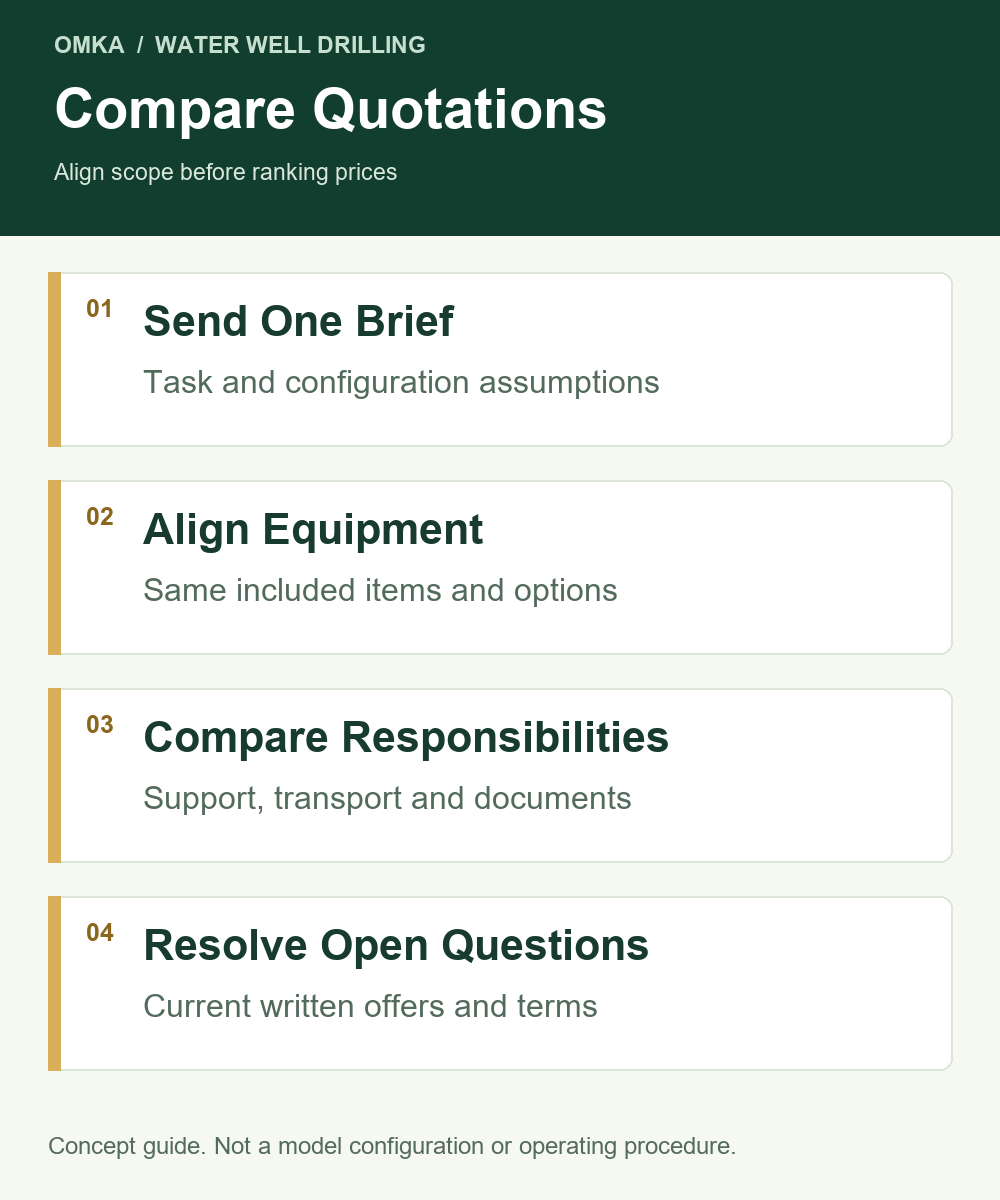
Send the Same Water Well Project Brief to Each Supplier
Prepare one description of the drilling task. Include target depth, borehole dimensions, available formation information, intended method, site conditions and relevant existing equipment. Where an input is uncertain, identify it as an assumption or open question.
Send the same brief with each quotation request. Otherwise, suppliers may solve different problems. One may assume a rig-only purchase, another may include air equipment and tools, while a third may use a different borehole or method assumption.
State the proposed destination and equipment boundary as well. A supplier needs to know whether it is quoting the machine alone, an agreed package or equipment intended to connect to customer-owned components. Those choices affect both technical review and price scope.
Keep a dated version of the brief. When a requirement changes, update the suppliers and comparison record. Mixing an older offer with a newer task can create an apparent price advantage that comes from different assumptions rather than the commercial proposal itself.
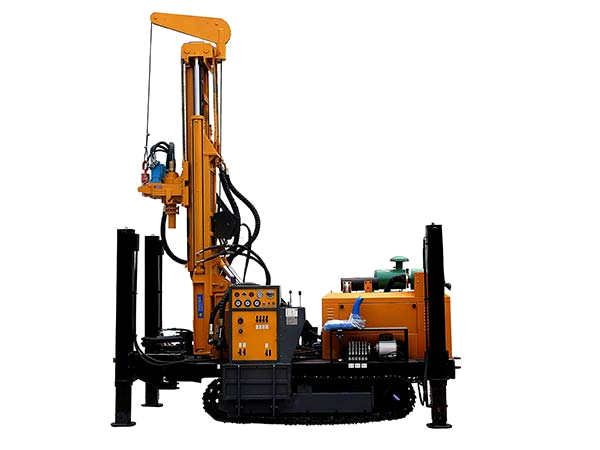
Compare the Rig Configuration and Package Scope
Identify the Actual Machine
Record the complete rig category, platform, model and configuration. Include the relevant engine arrangement and agreed options. A shortened name does not always distinguish a crawler from a truck-mounted unit or one configuration from another.
Read the technical information against the common task. Depth, diameter, torque, speed, lifting and handling fields have different meanings and conditions. They should not be reduced to a single ranking based on the biggest catalogue figure.
Where an offer leaves an important field unresolved, ask for the relevant documentation. An unqualified statement that a machine is suitable is less useful than an explanation of the proposed configuration and remaining information needed.
Define the Supporting System
Identify the selected tools and air or fluid-circulation equipment. A price for the main rig does not establish the cost or suitability of the complete system. The bottom tools, drill rods, interfaces and auxiliary equipment need a visible scope.
For air equipment, retain the relevant pressure and flow rating basis. For a fluid system, retain the pump duty and associated supply-and-return boundary. The technical review and the commercial line items should describe the same arrangement.
If a supplier lists an option separately, do not silently add it to the base package. If another supplier includes that item, the prices first need an aligned scope. This is the point where an apparently simple headline comparison becomes a practical procurement comparison.
Separate Consumables, Spare Parts and Customer-Supplied Items
Tools and consumables should have agreed identification and quantities. Descriptions such as “standard tools” or “spares included” can hide differences between offers. Record what those phrases mean for the actual proposal.
Spare parts also need a defined scope. Identify the supplied items and their relationship to the equipment configuration. Do not assume that an included spares package contains every part needed for future work or use a general stock claim as a substitute for a current offer.
Customer-owned equipment should appear in the comparison as a responsibility, even when it has no new purchase price. Its documentation and suitability remain part of the system review. An offer that assumes an existing compressor is usable may differ substantially from one proposing a new supporting unit.
Consumable life and maintenance costs need evidence before they become a commercial advantage. A quotation comparison can ask for relevant records and terms, but it should not invent a standard tool life or use an unsupported percentage to justify a higher price.
The useful result is a list of like-for-like items and a list of remaining differences. Keeping those two lists separate helps the buyer understand what the price actually covers.
Read Service and Documentation Terms as Written Commitments
Manuals and Equipment Identification
The supplied documents should match the equipment configuration. Ask which manuals, parts-identification information and packing records accompany the order. Where language or format is important, state the requirement and obtain an agreed response.
A document title alone may be insufficient. The buyer needs to know whether the material applies to the offered unit and supporting items. Generic marketing brochures cannot replace the relevant operating and identification documents.
This also helps after delivery. Accurate equipment identification and records support later parts requests and technical discussions. Their value is practical, but the comparison should still establish what is actually included rather than assume every supplier provides the same material.
Training, Warranty and Support
Training needs a defined audience, scope and delivery arrangement. Ask which equipment and functions it covers and what the agreement requires from each party. A general promise of training does not establish travel, duration or every form of assistance.
Warranty should be compared through the written coverage, conditions, exclusions and responsibility for claims. Do not infer current terms from an old brochure or transfer a competitor’s warranty language to the offered machine.
Technical support also needs a clear boundary. Identify the agreed contact process and responsibility without inventing response times or geographic service coverage. The buyer can then compare the actual commitments rather than different interpretations of “after-sales support.”
Keep confirmed terms beside the price comparison. A cheaper offer with an undefined support boundary is a different proposal, not automatically a worse one. The purpose is to make the difference visible enough for a purchasing decision.
Align Transport and Commercial Terms
Packing, Shipment and Destination
Compare the equipment state and shipment information. The rig’s listed overall dimensions are not necessarily the packed shipment dimensions. A complete package can also include separate auxiliary equipment, rods, tools and packing.
Identify who arranges transport, which destination or handover point is stated and what the quotation includes. Loading, delivery and customer handling responsibilities should be clear. Do not compare a machine ready at one location with a broader delivery offer as though the scope were identical.
Transport amounts and local charges need current information for the actual shipment and destination. Without it, use comparison fields rather than invent freight, tax or duty values. The equipment supplier’s quotation and the transport arrangement should remain distinguishable.
Currency, Validity and Payment Conditions
Record the quotation currency, date and validity. A comparison can become outdated if an offer has expired or its configuration has changed. Keep the revision history visible instead of treating an old screenshot as a current commitment.
Payment conditions and agreed delivery terms also affect the proposal. Compare what each written offer states and identify unclear responsibilities. Avoid assuming that the same short trade phrase resolves every item when the named place and supporting details are missing.
If currencies differ, any conversion should identify the date and rate used. That calculation only aligns amounts for a stated comparison; it does not fix future exchange rates or change the underlying contract currency.
Commercial differences do not establish technical suitability. Complete the equipment review and the scope alignment first, then use the commercial information to evaluate comparable proposals.
Use a Quotation Comparison Table
The table should begin with the common task, then list the offered configuration and included items. Add documentation, support, transport and commercial fields. Give unresolved questions their own status rather than hide them in notes.
Swipe or scroll the table to compare all columns.
| Comparison Field | Offer A | Offer B | Written Clarification Needed |
|---|---|---|---|
| Common project brief | Enter version | Enter version | Are both based on the same task? |
| Rig configuration | Enter complete identification | Enter complete identification | Are category and options clear? |
| Supporting equipment and tools | Enter itemised scope | Enter itemised scope | Which system components differ? |
| Customer-supplied items | Enter assumed equipment | Enter assumed equipment | Has suitability been assessed? |
| Documents and support | Enter written commitments | Enter written commitments | What remains undefined? |
| Transport and handover | Enter agreed boundary | Enter agreed boundary | Are shipment responsibilities aligned? |
| Commercial information | Enter currency, validity and terms | Enter currency, validity and terms | Are the offers current and comparable? |
This is a blank purchasing template, not a representation of actual supplier prices. Fill it with the current written offers and keep their references. Where a line does not apply, explain why rather than leave an ambiguous empty cell.
The table works best as a sequence. First establish the task, then resolve technical identification and scope, then compare commitments and price. Starting with a final price ranking can encourage the buyer to overlook differences already present in the earlier rows.
A Hypothetical Comparison With Different Scope
Imagine Offer A lists a rig with defined tools and supporting equipment, while Offer B quotes the machine alone. Both use a similar depth description. These are hypothetical offers, not real transactions.
The buyer should first obtain the missing package information for Offer B or separate the rig-only portion of Offer A where appropriate. Until scope is aligned, the headline prices answer different questions.
Now suppose both offers include the main components, but one leaves the connections and customer-owned equipment review unresolved. The comparison still needs those responsibilities clarified. Naming the same large machines does not prove an equivalent system or equivalent delivery scope.
The outcome may be a preferred proposal, a revised offer or a decision to obtain more information. Each can be a reasonable purchasing result. A comparison is useful when it explains the basis for the decision, not only when it produces an immediate lowest-price winner.
Common Mistakes When Comparing Rig Prices
The first mistake is comparing totals before aligning the brief and supply scope. Fix the underlying task and item differences first.
The second is assuming an option shown in a brochure is included in the offer. Use the written configuration and quantities, not the photograph or product-series description.
The third is treating vague support language as equivalent commitments. Ask for the actual documentation, warranty and training terms.
The fourth is using unsupported fuel savings, penetration rates or payback claims to rank proposals. Relevant evidence needs conditions and records; general promotional figures are not a financial calculation.
The fifth is ignoring revisions. A price can remain visually unchanged while the configuration or responsibility changes. Keep the current offer and task versions together.
Resolve Open Questions Before Comparing the Final Price
Send each supplier a concise list of unresolved technical and scope items. Request written answers that identify the relevant configuration and offer revision. This keeps the procurement record clearer than scattered verbal assumptions.
Distinguish questions that require new project information from those requiring supplier confirmation. Unknown formation information is not resolved by a commercial quote, while an unclear included accessory should be resolved in the supplier’s scope.
Use the existing water well rig enquiry checklist to prepare the common task. Review service information alongside the actual written offer, without assuming that a general page replaces transaction-specific terms.
Conclusion
Compare water well drilling rig quotations by aligning the task, equipment configuration, included items and written responsibilities. Then assess the commercial terms and final price against that common scope.
A clear comparison records both what is known and what still needs an answer. It makes the purchasing decision easier to explain and reduces the risk of a low headline price concealing an incomplete or differently defined offer.
Share your common water well task and the equipment scope you need through our contact page so we can review a comparable quotation request.